

Trekking the Annapurna Circuit by Spencer Cox
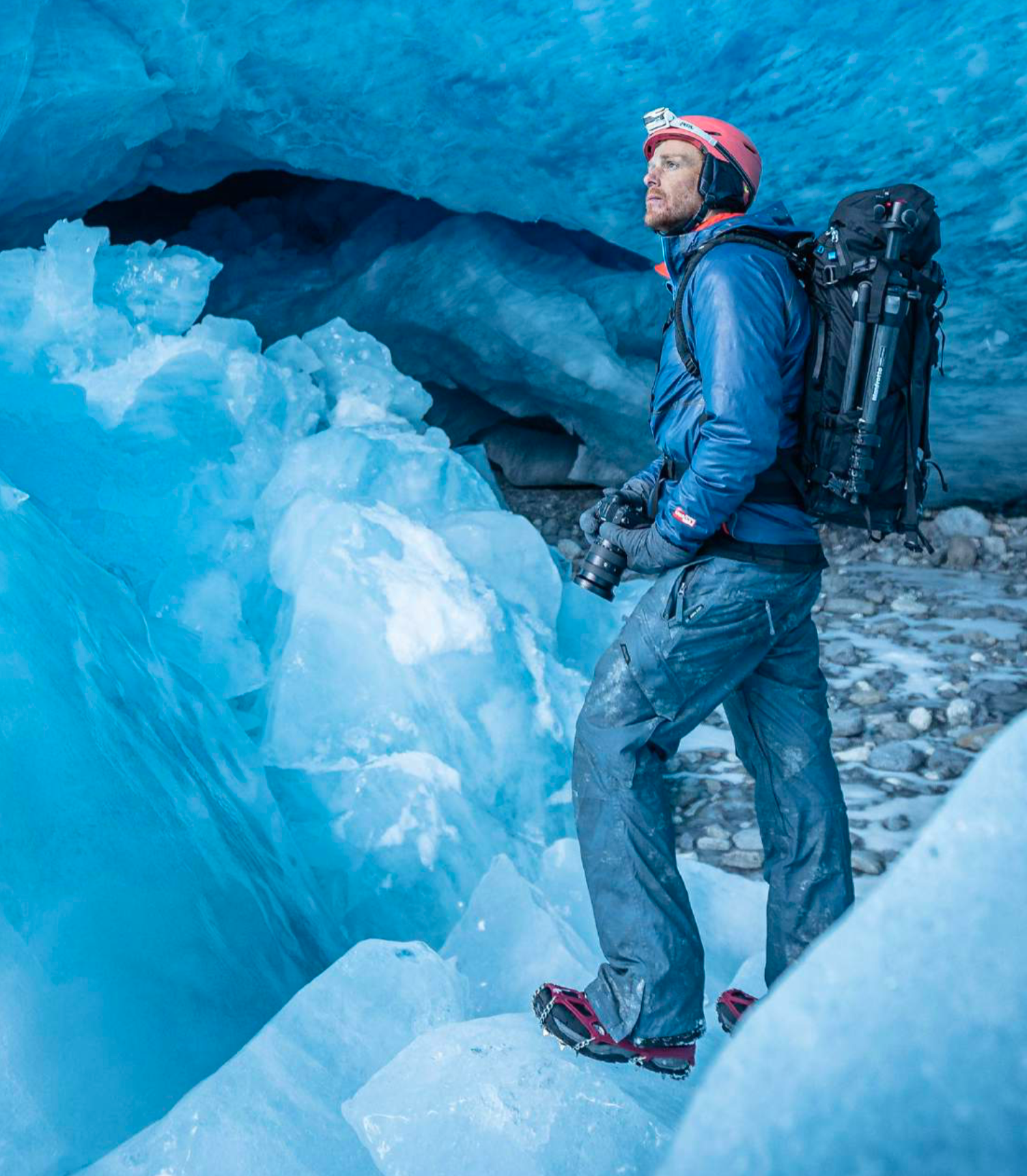
Trekking the Annapurna Circuit with the NYA-EVO Fjord 60-C by Spencer Cox
Spencer Cox is the Editor in Chief of Photography Life. His work has been shown in the Smithsonian Museum of Natural History for the Nature’s Best Photography exhibition, and additional photographs of his were exhibited in galleries in London, Malta, Beijing, Siena, and other cities around the world.
What backpack would you bring on a week-long trek? In the past, my answer to that question had been to carry a traditional hiking backpack, one meant for trekkers and not photographers. Even though I’m a photographer first and foremost, I never would have considered a dedicated camera backpack for a hike like this — in my experience, they aren’t comfortable or spacious enough for a grueling week on the trail. But when I was planning out my recent trek on the Annapurna Circuit in Nepal, I ran into a dilemma that is probably familiar to most photographers: airline carry-on regulations.
Because I was transiting through two different countries on separate airline booking codes, checking a bag for this trip was out of the question. That posed a serious problem, since my usual 60-liter hiking backpack is too big to fit the airline carry-on regulations. If I tried to squeeze it onto the flight anyway, and a gate agent made me check it last-minute, it would have been left behind halfway to my destination… forever circling the baggage claim area with no one there to claim it.
My first thought was to go with a smaller hiking backpack instead, but those simply can’t carry the amount of gear I was going to need on the Annapurna Circuit. A true dilemma! And that’s where the NYA-EVO Fjord 60-C came in.
What drew my attention to this bag was the option to expand or collapse it and achieve two different capacities. At 44 liters, it fits onto an airplane with no problem. Expanded to 60 liters, it carries all the gear I would need for a week-long trek. The final piece of the puzzle was to leave my bulky sleeping bag at home, rent one in Kathmandu for less than $20, and pack the Fjord 60-C into its 44-liter configuration for the plane.
I did all of that expecting, as a tradeoff, that it wouldn’t be as comfortable as my traditional hiking pack — but I was soon to be proven wrong. In today’s article, let me take you through my footsteps on the Annapurna Circuit, show you some of the sights, and explain how the NYA-EVO Fjord 60-C earned its place as my new go-to camera backpack.

Day 1
After landing in Nepal the previous night, my group set out from Kathmandu in a pair of Jeeps (well, Mahindra Scorpios) and drove for about twelve hours on twisting mountain roads toward the Himalayas.
I loved the trucking culture of Nepal, with huge, decked-out vehicles sporting all manner of wild paint and stickers. A shutter speed of 1/25th of a second was just right for capturing sharp detail on the front of the truck while allowing for motion blur as I panned with it:

I kept the Fjord 60-C next to me during the long drive, and I already started to appreciate how much easier it was to retrieve my gear compared to a traditional hiking backpack. I can only imagine fishing through a huge trekking pack in the backseat of a Mahindra Scorpio during a hairpin turn on a stomach-churning mountain road. My camera gear wouldn’t be the only thing rolling around, to say the least.
Day 2
Every hike starts with a single step, and in this case, I took that step in a boot laced with a Sherpa-approved knot thanks to the advice of our guide, Phurba. The knot certainly worked — that boot didn’t give me any trouble or come untied during the hike. Granted, neither did my other boot, which I tied with a classic double knot for a comparison. Looks like there’s more than one way to start a journey on the right foot.
Today, the trek followed (and sometimes took a shortcut around) the single road linking small Nepalese towns together under the shadow of Annapurna II. This is the 16th tallest mountain in the world, and visually, the mountain loomed so far overhead that it felt like it would fall over. For photography, a highlight was capturing silhouetted trees in front of the Himalayan peaks with a telephoto lens.

The first day hiking with a new backpack is all about getting it adjusted to your body and figuring out where you want to store your gear. I kept my full set of camera equipment in one of NYA-EVO’s medium RCIs, which fit the Sony a7V, Sony 12-24mm f/2.8 GM, Sony 24-50mm f/2.8 G, Tamron 50-300mm f/4.5-6.3, and DJI Osmo Pocket 4 for video. That left the rest of my bag for hiking essentials, clothes, and smaller accessories. Thanks to the internal divider in the Fjord 60-C, all of my camera gear stayed totally separate from the rest of my equipment, which made it much faster to find things when I needed them.
Day 3
It was bumpy hiking, at times dusty - especially when motorcycles sped past - but altogether beautiful. And being able to stop in towns for tea and bread was quite a treat. The number of villages shrank as the Circuit continued, but for now, I was enjoying it as much as possible.
Day three was much like day two, following the road up through sparse mountain towns and trying to gain more altitude. I began taking Diamox to help stave off altitude sickness, and now that I’m back home, I can report that it worked. Living in Colorado, I’m used to high-altitude hikes, but the Annapurna Circuit would be my new record by far.

This is also the first day of the trip where I needed to break out my gloves for a couple of hours in the morning. I was glad that the NYA-EVO Fjord 60-C seems designed to work smoothly with thick gloves, a feature that I don’t even see in a lot of dedicated hiking backpacks. It didn’t slow me down at all when accessing my gear.
I ended day three in the town of Upper Pisang, a bit of “classic Nepal” with beautiful views of Annapurna II and other 7000+ meter peaks looming over countless Buddhist prayer wheels and flags. There was a huge celebration there that day to commemorate the opening of a new temple, and it felt like the whole town was there.
Day 4
Today was the hardest day yet as my group ascended into Manang, the only large village left on this journey. I awoke at 6AM and set out early. Many hours later, the final numbers showed 14.5 miles and a gain of about 3200 feet of elevation (although, sadly, an extra loss of about 2500 feet because the second half the hike was downhill).
For lunch this day, I ate the best dal bhat of my life. It’s been a staple food of the trek: lentils, rice, potato curry, and boiled veggies. Today, there were also some roasted Szechuan spices. And the best part — free refills! Apparently, I’m not the only one who considers it a staple of hiking in Nepal. After the trek, back in Kathmandu, I would see several souvenir t-shirts aimed at trekkers that said "Dal Bhat Power, 24 Hours.”

Long days like this put a lot of stress on hikers, and of course on their packs. Personally, when the distances go up, I tend to favor a tight hip belt so that more of the bag’s weight goes on my skeletal system and less on my shoulders. The hip belt on most camera backpacks is too flimsy for my taste, and the hip belt on most hiking backpacks is too stiff and can cause bruises over time. But the Fjord 60-C’s hip belt struck the right balance, carrying a lot of weight without leaving me too sore at the end of the day.
Day 5
Today, thankfully, was a rest day. Sort of. Rest days according to me, and rest days according to our guide, are slightly different things. It ended up being a 6-mile hike with 1300 feet of elevation gain, and then back down to the guest house where we were staying in Manang. But at least the views were good!
After the hike, I walked around Manang, ate some delicious pastries, bought a few souvenirs, and took a few photos. The colorful prayer flags and immense mountain backdrops made it an exhilarating place for photography.

It’s been a successful trek so far. But as the elevation keeps ticking upwards, the relative luxury of Manang may begin to feel like a distant memory. I packed my warmer layers closer to the top of the backpack in preparation for the road ahead.
Day 6
For photographers who don’t speak Nepali, you may need a bit of translation assistance in order to get around the Himalayas smoothly. Luckily, I’m here to give you a few tips on the language:
- If your guide describes a hike as “downhill” or “very downhill,” that’s usually true.
- If they say “flat,” they mean “uphill”
- If they say “little uphill,” they mean “steep uphill.”
- If they say “very uphill,” bring a ladder.
The acclimatization hike today was “very uphill,” and it took a toll on my legs and lungs. But the views at the top were great.

It was the perfect time for some celebration, group photos, and a little music. Still, the pass itself loomed above me - both physically and psychologically - as I ended the day at 13,800 feet. It was high enough to feel the thinner air, but still about 4000 feet below my destination.
Day 7
On day seven, I made my way to High Camp. Which is a very accurate name. The hike was “little uphill” until the last mile or so, when it became “very uphill.” Temperatures also dropped dramatically during the final stretch. It began to rain, then snow pretty heavily.
Today, I was very glad to have the NYA-EVO Fjord 60-C instead of a traditional hiking backpack. After all, this bag is highly water resistant even without the included rain cover, and this meant that I didn’t need to worry about my camera gear getting soaked on the way up. Not only that, but the bag’s rear-access design made it easy to access my equipment even when the rain cover was attached. I don’t know of any traditional hiking backpack that can match that feature.

The hardest part of the day wasn’t really the hike, though — it was waiting two hours for High Camp to turn on their wood-fired stove once we arrived! Man, it was cold in there. Some hot tea only brought slight relief. My friend and I tried to play a game of chess, but the board kept getting covered in frost. Never in my life have I worn so many layers to bed.
Day 8
I awoke on day eight at 3:15 AM to begin “the hard day” — Thorong La Pass (17,770 feet / 5416 meters). The idea was to set out early, reach the top of the pass a couple of hours after sunrise, then begin the long descent to the town of Muktinath. My group hiked through packed snow and ice, while the wind and weather thankfully remained mild. Here’s a photo showing the scenery and some of my fellow trekkers:

And then the pass. It was a great milestone after a full week of hiking. More group photos, more celebration. We had trekked to a higher altitude than almost anyone in the world. Now it was time to descend into Muktinath, a whopping 5400 feet of elevation loss in a single day! At least the temperatures were climbing as the sun rose. I expanded the Fjord 60-C to its 60-liter capacity, stuffed in some unneeded layers, and descended.
The rest of the day wasn’t very productive photographically, but the warmth and downhill trail were truly welcome after a week of ascent. And yet, despite the difficulty of the hike — sometimes considered the highest trekking pass in the world, conquered after a week of nonstop hiking — I was only feeling kind of sore.
I admit that may not sound very impressive, but every similar hike that I’ve done has left me either very sore or slightly injured by the end. The improvement this time gave me something to chew on. Was it the backpack? Was it the dal bhat? Was it the little stuffed yak that I had been carrying along for morale?
I can’t say for sure. But what I do know is that the NYA-EVO Fjord 60-C didn’t let me down even on the toughest days of the trek. It worked smoothly for all of my considerations: fitting on the plane, safeguarding my equipment, offering quick gear access, and remaining comfortable the whole time. That’s a difficult set of things to balance. And it’s also why, for the first time in more than a decade, I have a new answer for my go-to camera backpack. From now on, you'll see me on the trail with the NYA-EVO Fjord 60-C.

You can view more of Spencer’s work on his website or follow him on Instagram.
Leave a comment
Comments will be approved before showing up.