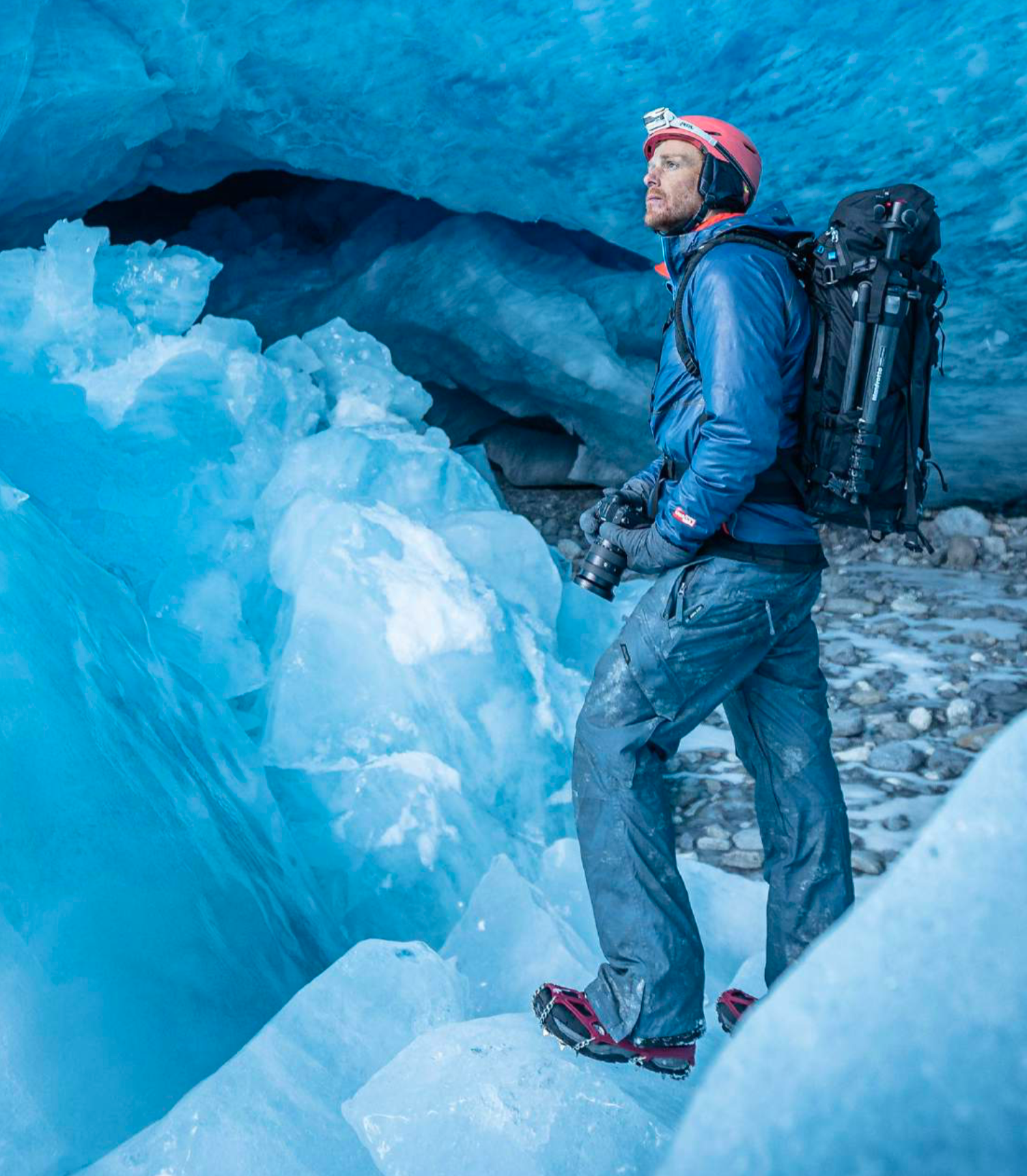


Where the Trail Ends: 10 Questions with Aritz Gordo
Aritz Gordo has been shooting sport since 2000, when photography and his passion for the outdoors collided and never separated. He gravitates toward natural, active imagery and brings a personal approach to every project. His ambition is straightforward: master the craft and deliver good work, without exception. Welcome to 10 with Aritz Gordo.
_____________________________
1. The Craft & Process - Walk us through your typical day shooting mountain biking in challenging conditions - what's your planning process and how do you scout locations?
My process usually begins several days before the shoot. We typically start with a specific model of bicycle that we want to photograph, and from there we think about what type of terrain and environment would suit it best: high mountains, dense forest, technical areas, rock, snow, or mud.
With that idea clear in mind, I begin to study the weather conditions we want to find for that shoot. I'm very interested in working with specific atmospheres: low fog, dawn light, changing conditions in the mountains, or forests shrouded in mist. To do this, I use different weather apps on my phone and follow the developments over several days.
Two or three days before the shoot, when we see a clear window, we finalize the definitive day. At that point, I plan everything with the rider: the exact time, how long it will take us to get to the location, how we are going to move around the area, what pace we will need, and when we need to be at each point. In difficult conditions, there is no room for improvisation, so planning is key to taking advantage of the light and getting to the right place at the right time.

2. Technical Approach - Mountain biking photography requires split-second timing. What's your approach to capturing that perfect moment when the rider, light, and landscape align?
That's a very good question, because in mountain biking photography, many factors come into play at the same time. Light and landscape are aspects that I usually work on in advance; it's something I constantly train for in my landscape photography and that I can have practically ready before the cyclist gets into action.
The real challenge is integrating all of that with the rider's activity. For me, it's essential to know the sport and, above all, to know the cyclist. Knowing how they move, what pace they have, and how they interpret the terrain makes a big difference. That connection makes it much easier to find the exact spot where the cyclist fits naturally into the landscape, without forcing the scene.
From there, it's all a process: developing the idea, working on it in the field, shooting many times, and repeating. Much of the learning comes later, at home, reviewing the images on the computer. Analyzing what works and what doesn't, and trying to improve session by session. It's that combination of preparation, experience, and constant review that allows you to anticipate and capture that moment when the cyclist, light, and landscape align.

3. Winter/Snow Shooting - Shooting bikes in snow creates stunning contrast but brutal conditions. What are the technical challenges and how do you overcome them?
The biggest challenge of photographing cycling in winter and in the snow is working in very demanding conditions, both technically and physically. In my case, what I look for most is that contrast between the warm lights of the sky and the cold tones of the snow and the terrain, and to achieve this you have to leave home very early and put up with temperatures that are often below zero.
The first photos at dawn are usually the most difficult: reaching the top of the mountain just as the sun begins to rise or the sky turns orange requires effort, planning, and enduring the cold at the most delicate moments. From there, the session flows more smoothly.
To be able to extend the sessions, it is essential to be well prepared: suitable clothing, good equipment, a bike in good condition, and photographic equipment well protected in your backpack. In the mountains and in winter, preparation is everything, and the better prepared you are, the more freedom you have to focus solely on creating images.

4. Gear Philosophy - You're hiking to remote locations with thousands of euros of camera equipment. What makes a backpack system work or fail in your line of work?
How you carry your equipment is fundamental in my work. Before each session, we decide which camera, lenses, and accessories we will need, whether we need a tripod, how many batteries, cards, and everything else that might be useful. All of this goes into a backpack that must meet three basic requirements: safety, comfort, and accessibility.
Safety comes first, because we work in risky environments and the equipment is often expensive and delicate. The backpack has to protect it from shocks, water, or falls. But that's not enough: it also has to allow you to move freely, be able to take out and put away the equipment quickly, and be comfortable for long bike rides or mountain hikes.
In addition, the backpack must have space for everything you might need: helmet, food, change of clothes... These are details that many people underestimate, but they make the difference between a comfortable and efficient session and an exhausting day full of obstacles.

5. NYA-EVO Experience - How has the NYA-EVO system changed your workflow in the field? Are there specific features that have made a real difference during shoots?
In photo shoots, there aren't always big differences between high-end backpacks, but the details do make a difference, and in the case of NYA-EVO, those details are what really improve my workflow.
What I like most is how it fits around the waist and how it allows easy access to the equipment: the zippers are strategically placed outside the belt, making it easy to open and close without any obstacles. I also love the external mesh for carrying the helmet, which is very practical when you're on the move.
Another strong point is its internal separation system, which allows me to clearly organize my photography equipment and clothing, avoiding mix-ups or problems during the session. It also has a water reservoir and multiple pockets for storing tools, batteries, cards, and small accessories, keeping everything within reach and well organized.
Small details like these may seem simple, but they make a real difference when you're in the mountains, in the cold, or on long routes, because they allow you to concentrate on taking pictures and not on reorganizing or searching for things in your backpack.

6. Client Work Reality - Working with brands like Orbea, what do clients actually want vs. what photographers think they want? How do you balance creative vision with commercial needs?
I think my work for brands like Orbea goes a little further than what many photographers might think they are looking for. It's not just about showing bikes in action, but about conveying authentic adventures: sunrises in difficult conditions, thick fog, starry nights... especially in areas like the Basque Country, which is a landscape they value highly.
Beyond the sessions with other cyclists from the brand, they also really appreciate my work in solo sessions, seeking out unique lighting and atmospheres while riding an Orbea bike. For them, the real value lies in the experience and the narrative that is built around the adventure, not just in the technical photography.
Balancing this with my creative vision means always prioritizing the authenticity of the scene and the story I want to tell, while incorporating the bike naturally into the environment. This way, I get images that are both true to the brand and to my way of working, without looking posed or forced.
7. Weather & Adaptability - Mountain weather changes in minutes. How do you prepare for that as best you can and what are the tips when you find yourself in that situation?
In the mountains, especially in the early morning or at night, the weather can change in a matter of minutes, and that requires maximum preparation and adaptability. The first thing is to always carry extra clothing and a complete first aid kit; you never know when you're going to need extra protection or quick assistance.
Another key point is to have a plan B: know where there are nearby shelters, safe descent routes, and familiar access points in case of storms or bad weather. Before venturing out at difficult times, I usually explore the mountain during the day to familiarize myself with the terrain, the paths, and any potential critical points.
Knowing the mountain well allows me to move safely in the dark and react quickly to any weather changes, avoiding unnecessary risks of falls or loss of orientation. Preparation, foresight, and respect for the environment are essential to being able to work calmly and concentrate on photography, even when nature becomes unpredictable.

8. Location Secrets - Spain and the Pyrenees offer incredible terrain. What makes a location 'work' for bike photography beyond just looking beautiful?
For me, beyond the beauty of the landscape, what makes a location work for cycling photography is, above all, the light. The time of day, the orientation, and how the light interacts with the terrain are decisive factors in making the image work.
Depending on what I want to photograph, I plan the location in detail: if I want to capture the moon, I have to anticipate the framing in relation to it; if it is the Milky Way, I must orient the session so that the stars appear where I want them to; and if I am looking for a sunrise or sunset, I need to be in the right place so that the light falls in a way that enhances the scene and highlights the cyclist on the terrain.
In short, a location is not just beautiful: it has to be functional for the light, the composition, and the narrative I want to tell with the bicycle and the environment.

9. Rookie Mistakes - What's the most common mistake you see aspiring outdoor sports photographers make - either technically or in their approach?
The most common mistake I see in aspiring outdoor sports photographers is focusing too much on finding “the shot” or the spectacular moment, without thinking about the narrative they are building.
In my work, I always try to create a little story with the shoot. Within that story, there will be two or three key images that will really make a difference and showcase the whole body of work, but those photos only make sense within a broader narrative.
That's why, in addition to looking for the perfect light, it's important to pay attention to framing and composition so that each image contributes to the story you're telling. Many beginners focus only on the isolated moment and lose the coherence of the session, and that's where I think you have to pay more attention.
10. Sustainability Angle - You spend so much time in these wild places. How do you think about your environmental impact as a photographer, and does it influence your gear choices?
When I work in wild places, I always try to minimize my environmental impact. My philosophy is to photograph landscapes and scenes that have been created by nature, avoiding artificial elements whenever possible, except when they are part of the history of the place.
I also pay close attention to the waste I generate: all food, packaging, or any other debris I bring with me always comes back home with me. For the past couple of years, I've even set myself a small personal challenge: to try to bring down from the mountain more trash than I've generated. It's a symbolic gesture, but I think it's important to help keep these places clean for those who visit them after me.
When it comes to equipment, I look for materials and solutions that are durable and don't generate unnecessary waste, because every choice influences how you interact with the environment. For me, sustainability is not just an ethical principle, but part of the responsibility of those who work in nature and want to continue enjoying it without leaving a trace.

__________________
To check out more of Artiz Gordo's work.
Leave a comment
Comments will be approved before showing up.